.svg)

.jpg)
Navigating Community Safety: The Ultimate Guide to the People Over Papers Map
In an era where information is the most powerful tool for protection, the People Over Papers map has emerged as a vital shield for vulnerable communities. What started as a grassroots initiative on TikTok and Padlet has transformed into a national movement for transparency and safety. 🛡️
This guide explores the project’s evolution, the philosophy of People over people, and the critical differences between modern digital tools and the historical uses of paper map technology.
What is a People Over Papers map? 🗺️
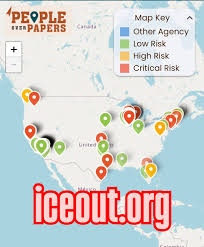
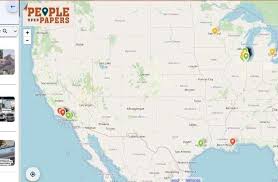
A People Over Papers map is an interactive, crowdsourced digital tool designed to track and visualize sightings of Immigration and Customs Enforcement (ICE) activity in real-time. Unlike standard navigation apps, this specific Immigration checkpoints map allows users to drop pins where they see enforcement vehicles, raids, or checkpoints.
The primary goal of the People Over Papers map free resource is to replace fear with actionable data. By providing visibility, it allows families to make informed decisions and bypass high-risk zones, embodying the spirit of People for Papers—a community where neighbors protect neighbors regardless of status.
The Origins: Who created People Over Papers? 👥
If you are wondering, "Who created People Over Papers?" the answer lies with two dedicated community organizers known by the pseudonyms Kat & Celeste. They lead a decentralized team of approximately 50 volunteers who vet crowdsourced reports to ensure the highest level of accuracy possible.
Initially, the project gained massive traction through the Padlet People Over Papers map California board. However, its rapid growth and impact led to challenges with hosting platforms.
Functionality: Is People Over Papers anonymous? 🔒
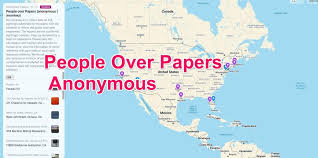
For many users, digital privacy is a matter of life and death. Is People Over Papers anonymous? * Anonymous Reporting: Yes. The site is designed so that users can report sightings without creating an account or leaving identifying metadata.
Verification: While the reports are People Over Papers anonymous, the volunteer team works behind the scenes to cross-reference pins with local news and rapid-response networks to filter out false alarms.
Digital vs. Physical: The "Uses of Paper Map" Debate 📜
While many search for the app for immigration raids, it is helpful to understand the difference between paper maps and digital maps in high-stakes situations.
| Feature | Digital Maps (e.g., People Over Papers) | Paper Maps |
|---|---|---|
| Updates | Real-time, live crowdsourced data | Static, requires manual updates |
| Privacy | High (if using People Over Papers anonymous features) | Maximum (zero digital footprint) |
| Reliability | Depends on battery and signal | Works anywhere, anytime |
| Awareness | Focused on specific "pins" | Better overall spatial awareness |
Who created paper maps? 🏛️
The history of cartography is long. While early world maps are attributed to the Greek philosopher Anaximander, the "Father of Map-making" is often considered to be Ptolemy, who first represented the Earth as a sphere. Modern paper maps evolved over centuries of global exploration.
Recent Changes: Where did People Over Papers move? 🚀
A common question recently has been: "Is the People Over Papers website down?"
In October 2025, the digital platform Padlet removed the "People Over Papers" board without warning, following political pressure and surges in traffic. However, the project did not disappear. So, where did People Over Papers move? The creators quickly launched a dedicated, independent website at
The Movement: What does "People Over Paper" mean? 🕊️
You might ask, is "People Over Papers" just a saying? While it functions as a powerful slogan, it represents a deep-seated humanitarian philosophy.
What does "People Over Paper" mean? It is the fundamental belief that human life, family unity, and safety should always be prioritized over administrative documentation or "papers." It is a call for People over people—human-to-human solidarity—over cold bureaucracy.
Functionality: Is People Over Papers anonymous? 🔒
For many users, digital privacy is a matter of life and death. Is People Over Papers anonymous? * Anonymous Reporting: Yes. The site is designed so that users can report sightings without creating an account or leaving identifying metadata.
Verification: While the reports are People Over Papers anonymous, the volunteer team works behind the scenes to cross-reference pins with local news and rapid-response networks to filter out false alarms.
Digital vs. Physical: The "Uses of Paper Map" Debate 📜
While many search for the app for immigration raids, it is helpful to understand the difference between paper maps and digital maps in high-stakes situations.
| Feature | Digital Maps (e.g., People Over Papers) | Paper Maps |
|---|---|---|
| Updates | Real-time, live crowdsourced data | Static, requires manual updates |
| Privacy | High (if using People Over Papers anonymous features) | Maximum (zero digital footprint) |
| Reliability | Depends on battery and signal | Works anywhere, anytime |
| Awareness | Focused on specific "pins" | Better overall spatial awareness |
Who created paper maps? 🏛️
The history of cartography is long. While early world maps are attributed to the Greek philosopher Anaximander, the "Father of Map-making" is often considered to be Ptolemy, who first represented the Earth as a sphere. Modern paper maps evolved over centuries of global exploration.
Essential FAQ: Safety and Navigation ❓
What is the app for immigration raids? 📱
Currently, major app stores (Apple and Google) have a history of removing such tools. To access the "app," the People Over Papers app cómo descargar process is simple: visit iceout.org on your mobile browser and select "Add to Home Screen" to create a shortcut icon on your phone.
Where can I find an Immigration checkpoints map? 📍
The most up-to-date Immigration checkpoints map is hosted at iceout.org. It features pins for stationary checkpoints as well as mobile enforcement activity reported by the community.
What are the three types of maps? 🌎
In geography, the three types of maps are:
Physical maps: Focus on natural features (mountains, rivers).
Political maps: Focus on human-made boundaries (cities, borders).
Thematic maps: Focus on a specific theme—the People Over Papers map is a thematic map focused on community safety data.
What are the uses of paper map in an emergency? 🎒
The uses of paper map include navigating when cellular towers are down, avoiding digital tracking, and having a reliable backup when your phone battery dies.
Final Thoughts on Community Defense ✨
The transition from the Padlet People Over Papers map California board to a dedicated independent site proves the resilience of this movement. Whether you are using a digital Immigration checkpoints map or keeping a paper map in your car, the goal is the same: stay informed, stay safe, and put People over people.
.jpg)
.jpg)